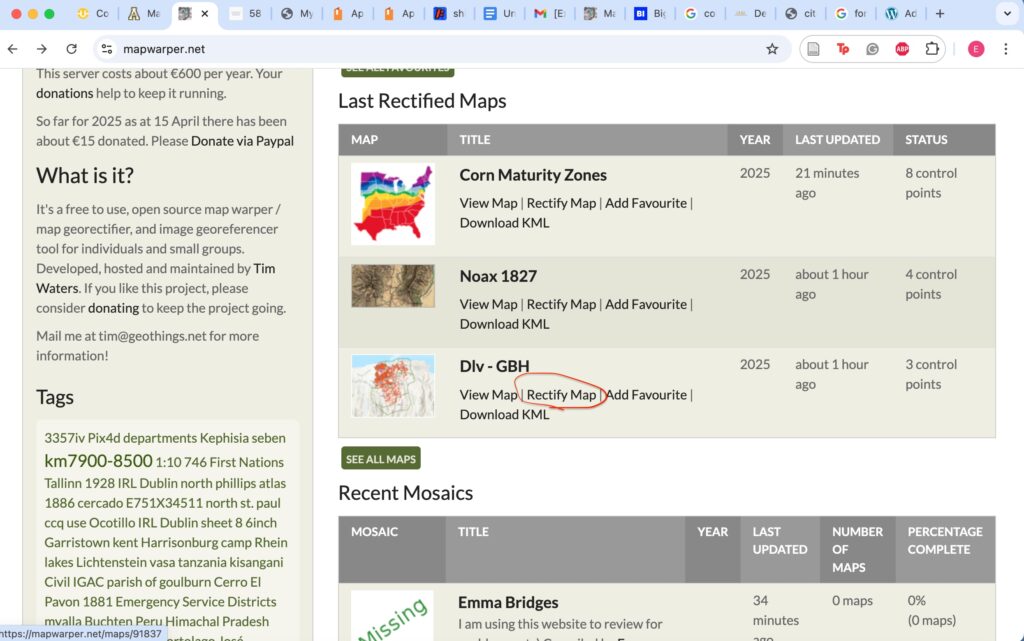
I decided to review MapWarper for this blog post. I wanted to use a resource I had not worked with before to review a map-making website. I had previously used Story Map (see projects page for full project) in a class. I decided to use Map Warper for my review. After making the account, the website was fairly easy to navigate, though it was a bit overwhelming at first. Once you make an account, the user can browse other mosaics, which contain maps, or display your own. To display a map, you would upload an image or get the map from a different website. Sometimes a website may be inaccurate, I thought it was helpful that there is an option to “rectify maps,” in case something is incorrect. The original creator of the mosaic does not need to be the one to rectify; this is helpful for historians using this website, as it’s a form of peer review.
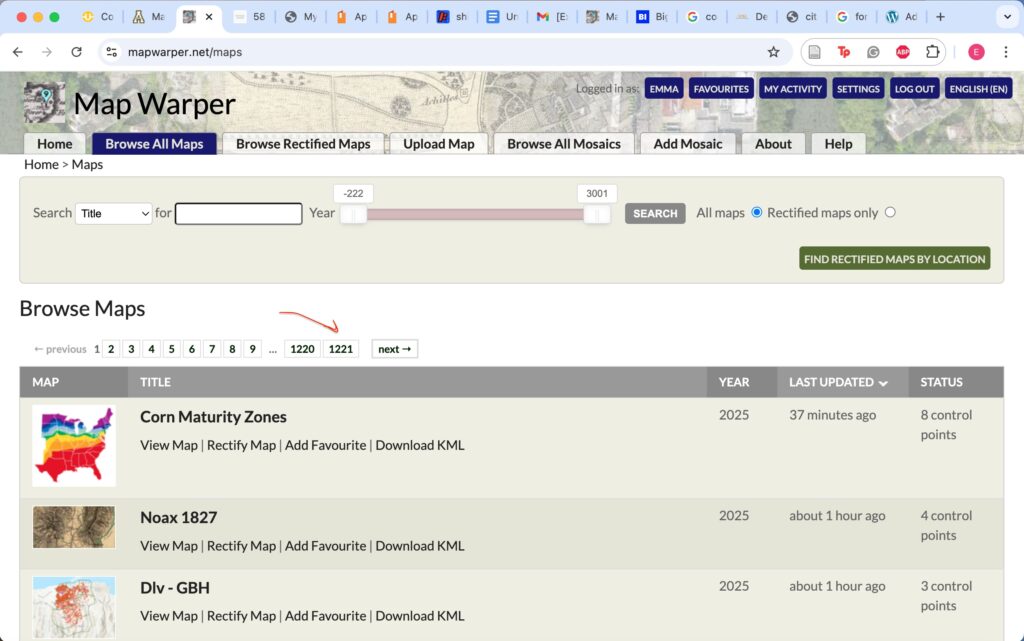
Digital Historian may use this website for a number of reasons. Firstly, they can view other published mosaics, which is a helpful resource when doing research. The easy access for digital historians to view different maps is quite convenient. With over one thousand pages of created mosaics/ maps, any digital historian searching for something specific may want to look there.
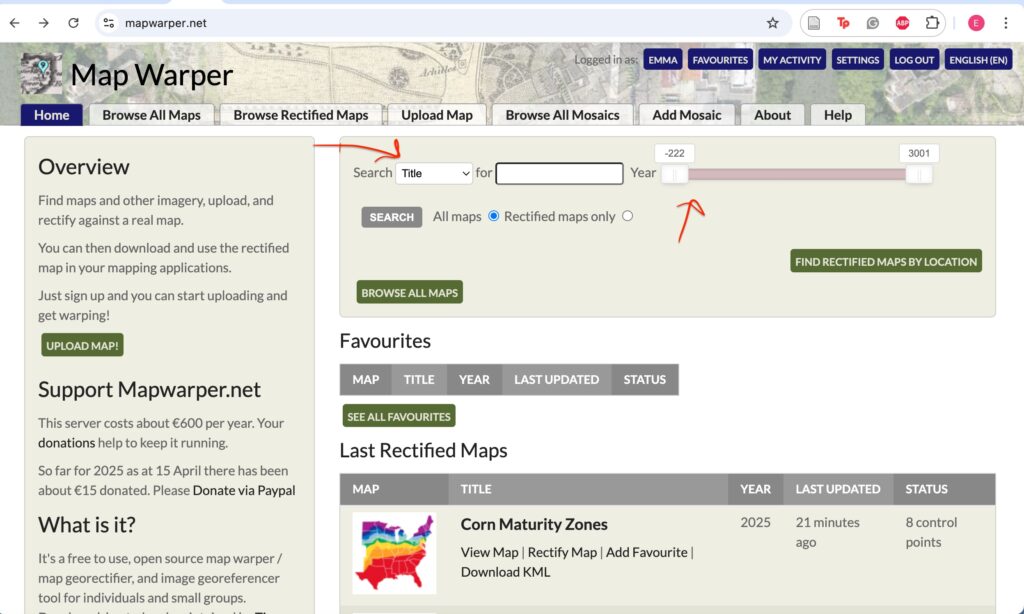
Helpfully, there is a filter by time, location, and name. Overall, this website can help digital historians neatly display their maps in one forum.
Lastly, another helpful element of MapWarper, as mentioned above, is the website giving you access to rectify incorrect information. Like Wikipedia, this could potentially lead to problems, but if one examines the source where the map came from, you can double check that the information you are using is accurate.
However, it is important to note, there were some drawbacks to this website. While it is helpful to have a map rectification section, anyone can rectify your map. This could pose a problem if someone with inaccurate information tries to “fix” your map. After reading the article, “When Maps Lie,” it became clear that maps, while a useful resource, can be tricky. Overall, a good map is meant to lead scholars to more questions; the maps on this website left little room for questions. On top of that, any map presented could be incorrect or contain skewed data. The website itself lets you upload images from several websites, regardless of their map legitimacy.
Another drawback was understanding how the website worked, unfortunately, there was no tutorial, l and the “help” page was for very specific questions, not a how-to.